
Personalised Ayurvedic Nutrition – know your Praktriti !

Ayurveda is a medical science which emphasizes diet and healthy lifestyle to prevent diseases and achieve good health. Health is defined by the WHO as physical, mental and social wellbeing. The topic of health is thoroughly examined and discussed in the ancient science of Ayurveda. Nutrition, is termed as Aahaar and Pathya in Ayurveda. Proper nutrition, by means of dietary control, is the basis of many Ayurvedic treatments.
Fundamentals of Ayurveda
The constitution of Ayurveda is mainly based on 3 elements i.e. Vata, Pitta and Kapha [2]. Body and mental types, metabolic processes, biological rhythm, seasonal variations, various other physiological and pathological processes, etc. are understood in terms of innumerable permutations and combinations of these elements in the body. These are also known as Tridosha.
Characteristics of each dosha and its Prakriti [6]
- Vata – combination of air and ether elements representative of kinetic energy and movement, physical or mental functions, and degeneration.
- Vata dominating Prakriti people are hyperactive, uneven eyes, rough and dry skin and prone to joint disorders.
- Pitta – combination of fire and water elements representing thermal energy and metabolism conversion, vision, and emotions.
- Pitta dominating Prakriti people are medium stature, brown eyes, fair and moist skin and prone to gastric diseases and hypertension.
- Kapha – combination of earth and water elements representing potential energy and structure in the body. It is associated with processes of generation, reunion, and synthesis.
- Kapha dominating Prakriti people are broad and long stature, fair, calm and prone to respiratory diseases ,obesity, diabetes etc.
Ayurvedic perspective about diet
Ayurvedic texts of 300 BC–700 AD described various attributes of food ingredients including method of preparation and effects of those food ingredients on the human body. The texts also included guidelines for maintaining food safety, listed compatibilities of food based on the tastes, metabolism, dosage, time, place, etc. This wealth of information allows for prescription of a proper dietary intake based on the digestive ability of an individual, the climate and the nature of food being consumed[5].
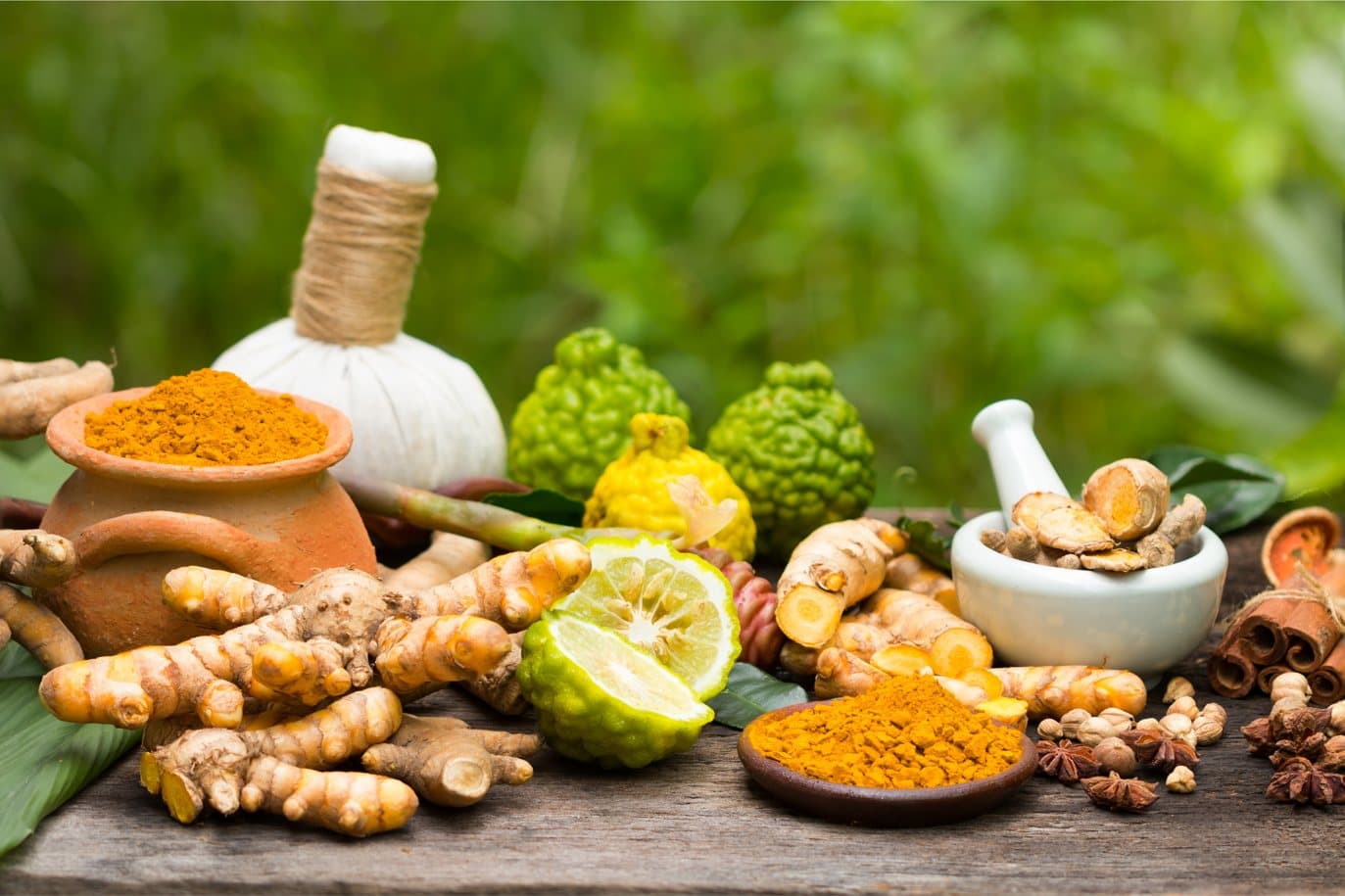
According to Ayurveda, Pharmacogenomics and Nutrigenomics are mostly intersecting concepts.[1] For example, turmeric or haridra (Curcuma longa) is a herb may be consumed as a food item or used a spice. It has been prescribed for treatment of different ailments ranging from gastro-intestinal-tract (GIT) disorders to cancer. Suntha or ginger is used as a spice in many food preparations and is often prescribed for treatment of diseases of the respiratory system[4].
Is diet or nutrition requirement the same for everyone?
No! Ayurveda describes Ahara as specific food/dietary schedules for different times of the day and for different seasons according to one's age, individual constitution (or Prakriti) and also place of origin of an individual (or Desha).
Taste
Ayurveda describes 6 types of tastes - sweet, sour, salty, pungent, bitter, and astringent and their physiological action on body.[2,3]
Relation between food and mood:
There is a relation between mental state and diet. Ayurveda believes in balancing triguna i.e. Satva (calmness, patience and intelligence), Raja (anxiety, grudge, aggressiveness, anger) Tama (sorrow, lethargy, depression) which maintains the mental and psychological equilibrium in each individual. For example, according to Ayurvedic principles, consuming spicy food regularly increases “Raja” & makes a person anxious and short tempered.
Relation between food and time
Ayurveda believes that the physiology of our bodies correlates with the external universe. Pachkagni (digestive power) is symbolized by the sun & is more efficient in afternoon and less so in evening. So according to Ayurvedic principles, a heavy lunch and light dinner is advisable. For all meals, fill ⅓ of your stomach with food, ⅓ with water and the remaining ⅓ should be kept empty for tridosha to digest the food. The gap between two meals should be at least 3 hr.
So, we can conclude
- Nutrition is termed as Aahaar and Pathya in Ayurveda, & sometimes, proper management of nutrition is a complete treatment in itself.
- Ayurveda describes dietary schedules considering the following: different times of the day, seasons, age, desha, one's individual constitution or Prakriti.
- According to Ayurveda there is a relation between mental state and diet.
- Ayurveda describes 6 types of taste with their physiological action on body.
- For all meals, fill ⅓ of your stomach with food, ⅓ with water and the remaining ⅓ should be kept empty for tridosha to digest the food. The gap between two meals should be at least 3 hr.
References
- Banerjee S, Debnath P, Debnath PK. Ayurnutrigenomics: Ayurveda-inspired personalized nutrition from inception to evidence. J Tradit Complement Med. 2015 Mar 24;5(4):228-33. doi: 10.1016/j.jtcme.2014.12.009. PMID: 26587393; PMCID: PMC4624353.
- Aharya Vidyadhar Shukla and Prof.Ravidatta Tripathi Edited by Priyavat Sharma Charaka Samhitahikitsa Sthana 29th Chapter :Vatarakta; reprint 2007.
- Dr. anna Munte and Pandit K Navare edited by Pandit H S Paradkar Ashtanga Hrudayam, Reprint 2009.
- Dr. Chunekar Krushachandra and Dr. Landry G.H, Bhavaprakash edited by Dr. G S Pandey Chaukhamba Bhatati Academy. Varanasi. 2003.
- Payyappallimana U, Venkatasubramanian P. Exploring Ayurvedic Knowledge on Food and Health for Providing Innovative Solutions to Contemporary Healthcare. Front Public Health. 2016 Mar 31;4:57. doi: 10.3389/fpubh.2016.00057. PMID: 27066472; PMCID: PMC4815005.
- Kurande V, Waagepetersen R, Toft E, Prasad R, Raturi L. Repeatability of Pulse Diagnosis and Body Constitution Diagnosis in Traditional Indian Ayurveda Medicine. Glob Adv Health Med. 2012 Nov;1(5):36-42. doi: 10.7453/gahmj.2012.1.5.011. Epub 2012 Nov 1. PMID: 27257530; PMCID: PMC4890095.